
Nav was very careful in explaining…
Nav was very careful in explaining various options, pricing and implications of a purchase choice.

Platinum prices change constantly, and our live spot platinum prices and charts update every minute during trading hours to reflect recent market fluctuations. The platinum price table below displays pricing in increments; platinum price per gram, platinum price per ounce and platinum price per kilogram. Visit our interactive platinum chart to view historical platinum prices dating back 10 years.
| Platinum Spot Prices | Today | Change |
|---|---|---|
| Platinum Prices Per Ounce | $1,778.00 | |
| Platinum Prices Per Gram | $57.16 | |
| Platinum Prices Per Kilo | $57,162.70 | |
We provide platinum investors with up to the minute live platinum product prices on in-demand platinum bullion bars and coins.




Showing our 5-star reviews
Nav was very careful in explaining various options, pricing and implications of a purchase choice.
I have been buying from Monex for over 25 years. Hard to beat there pricing and always good service My rep. Art Levine is the Bomb
Frank immediately responding to my financial needs
Want your kit sooner?
Faster delivery
is available by phone.
800-444-8317
Platinum prices are influenced by industrial demand, mine supply concentration, and broader economic conditions. Unlike gold, which functions primarily as a monetary asset, platinum is predominantly an industrial commodity. Its price is highly sensitive to manufacturing cycles and economic activity.
The automotive industry is one of the largest sources of platinum demand as it is widely used in catalytic converters for diesel-powered vehicles. Mine supply is heavily concentrated in South Africa, which accounts for approximately 80% of global platinum production. Geopolitical developments and operational challenges at South African mines, including electricity availability, can directly affect available supply and platinum prices. Changes in automotive technology, including the substitution of platinum for palladium in gasoline catalysts, can also create significant price movements.
Since platinum is priced in U.S. dollars on global markets, changes in the value of the dollar can influence platinum prices. When the dollar weakens, it takes more dollars to buy commodities like platinum, which tends to push prices higher. When the dollar strengthens, platinum prices may face downward pressure.
No. Physical platinum is not available at the published spot price. The spot price is a reference point for the underlying metal value, not a purchase price. When buying physical platinum, the price you pay includes the spot price plus a premium that covers manufacturing, distribution, and dealer costs.
Premiums vary by product type. Platinum bars typically carry lower premiums over spot, while government-minted platinum coins carry higher premiums due to minting costs and their status as legal tender.
Platinum's price volatility stems from its role as an industrial commodity rather than a monetary metal. Unlike gold, which is supported by broad global demand from investors, central banks, and financial markets, platinum depends heavily on industrial applications, particularly automotive manufacturing. This narrower demand base makes platinum prices more sensitive to economic cycles and changes in industrial activity.
Supply concentration adds to this volatility. More than 70% of the world's platinum comes from South Africa, meaning mine disruptions, labor unrest, or electricity shortages at South African operations can quickly affect global supply. When supply tightens in a market this concentrated, price movements can be significant in either direction.
Platinum also trades in lower volumes than gold, which means the market absorbs buying and selling pressure less efficiently. Smaller markets tend to produce larger price swings from the same level of trading activity.
Platinum has experienced several periods of significant price appreciation. Some of the most notable gains in recent history:
Each of these cycles reflected periods where industrial demand or supply disruptions outpaced available supply. These historical patterns illustrate why platinum investors tend to monitor supply and demand fundamentals closely.
Platinum and palladium often move in the same general direction since both are platinum group metals with significant exposure to automotive demand. However, they don't always move in lockstep. The two metals often diverge when one is substituted for the other in catalytic converter manufacturing, when their individual supply dynamics differ, or when investor sentiment favors one over the other based on price levels or market outlook.
Platinum and gold prices often move in the same general direction since both are precious metals that respond to broader economic conditions, currency movements, and investor sentiment. During periods of financial market stress or dollar weakness, both metals can benefit from increased investor demand.
However, platinum does not always follow gold closely. Platinum's significant industrial demand component means its price can diverge from gold during periods of economic slowdown, shifts in automotive production, or changes in industrial activity. Gold's role as a monetary metal and safe haven tends to keep it more insulated from these forces.
Platinum offers diversification benefits for investors whose portfolios are concentrated in traditional financial assets such as stocks and bonds. As an industrial commodity with its own distinct supply and demand drivers, platinum's price movements don't always correlate with broader equity markets.
That said, platinum's dependence on automotive manufacturing means its price can be sensitive to economic cycles in ways that gold and silver are not. Investors typically consider platinum as one component of a broader precious metals allocation rather than a standalone holding.
Both platinum and palladium are platinum group metals with significant exposure to automotive demand, but they have distinct supply sources, price histories, and demand dynamics worth understanding before choosing between them.
Platinum is more commonly used in diesel engine catalytic converters, while palladium has historically dominated gasoline-powered vehicle catalysts. Platinum is also increasingly being evaluated as a substitute for palladium in gasoline catalysts, which has implications for long-term demand for both metals. In recent years, platinum has traded at a discount to palladium, which some investors view as a relative value opportunity.
Investors typically consider both metals as part of a broader precious metals allocation. Current pricing, supply conditions, and your outlook on automotive demand are all relevant factors when evaluating either metal.
Platinum and silver both have significant industrial demand components, but they serve different roles in a precious metals portfolio.
Silver benefits from broad industrial demand within electronics, solar energy, and manufacturing, as well as strong investment demand as a monetary metal. Its lower price per ounce makes it accessible for investors looking to build a physical metals position incrementally.
Platinum's industrial demand is more concentrated, primarily in automotive catalytic converters and an expanding role in hydrogen fuel cell technology.
Platinum is rarer than silver and has historically traded at a significant premium per ounce. That premium has compressed in recent years, which some investors view as a potential opportunity.
The right choice depends on your investment goals, risk tolerance, and outlook on industrial demand trends for each metal.
Platinum has entered a period of persistent supply deficits, with the market projected to record its fourth consecutive annual shortfall in 2026 according to the World Platinum Investment Council. Above-ground stocks have been steadily depleted and are expected to cover less than three months of global demand by year-end.
Supply remains constrained, with South African mine output broadly flat and total supply growth dependent largely on recycling. On the demand side, industrial demand is expanding, supported by stricter vehicle emissions standards and growing interest in hydrogen fuel cell technologies. Automotive and jewelry demand have softened modestly, but investment demand for platinum bars and coins has grown.
The pace of electric vehicle adoption, South African mining conditions, and broader macroeconomic conditions remain the key variables that will influence platinum's price direction in the near term.
The answer is both, depending on the application.
Platinum is primarily used in catalytic converters for diesel-powered vehicles, a market that has faced headwinds since the 2015 Volkswagen emissions scandal accelerated the shift away from diesel in Europe.
However, platinum plays a potentially significant role in the transition to clean energy through hydrogen fuel cell technology. Proton exchange membrane fuel cells, used in hydrogen-powered vehicles and stationary power applications, rely on platinum as a catalyst. As hydrogen infrastructure expands and fuel cell adoption grows, this demand channel could offset losses from the decline of diesel vehicles over time.
Pure battery electric vehicles require no catalytic converters and therefore no platinum for that application, but hybrid vehicles, which still use internal combustion engines, continue to support automotive platinum demand.
Whether platinum is undervalued relative to gold depends on how you measure value and the time frame you consider.
Platinum is significantly rarer than gold and has historically traded at a premium. That relationship inverted after the 2015 Volkswagen diesel emissions scandal, which removed a major source of platinum demand. Since then, platinum has traded at a persistent and widening discount to gold, currently at less than half the gold price.
Investors who view this discount as historically anomalous point to platinum's supply deficits, industrial demand growth, and potential upside from hydrogen technologies as reasons the gap may narrow over time. Others argue the discount reflects a structural shift in platinum's demand outlook driven by the decline of diesel vehicles.
The platinum-to-gold ratio measures how many ounces of platinum it takes to buy one ounce of gold. When the ratio is above 1, platinum is more expensive than gold. When it falls below 1, gold costs more per ounce than platinum.
For most of the 2000s, platinum traded at a premium to gold, with the ratio peaking above 2 during the 2008 diesel demand boom. Following the 2015 Volkswagen emissions scandal and the subsequent decline in European diesel vehicle demand, the ratio fell sharply and has remained well below 1 since. It currently sits near historic lows.
Some investors use the ratio as a relative value indicator, viewing periods of extreme discount as potential entry points for platinum. As with any market metric, the ratio reflects current supply and demand conditions and does not guarantee future price movements
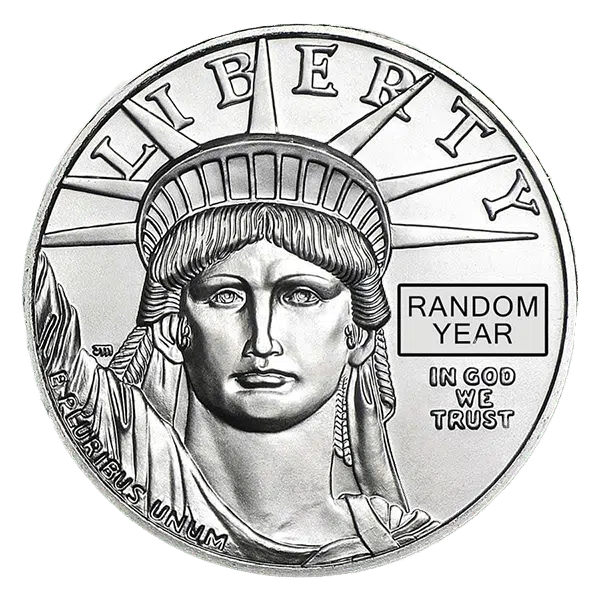
Platinum bars and coins available through Monex are .9995 fine platinum, which is the recognized purity standard for investment-grade platinum products. This standard applies to both platinum bars and government-minted coins such as the Platinum American Eagle and the Platinum Canadian Maple Leaf.
Yes. Platinum meeting the .9995 fine purity standard is eligible for inclusion in a Precious Metals IRA. Monex offers IRA-eligible platinum bars and coins and can connect you with a qualified custodian to facilitate your platinum IRA investment.
Platinum is one of the rarest metals on earth and has significant industrial demand across multiple sectors. The automotive industry relies on platinum for catalytic converters, which reduce harmful vehicle emissions. The medical industry uses platinum in the manufacture of equipment and in certain cancer treatments. Platinum is also used in electronics, industrial machinery, and jewelry.
This combination of rarity and broad industrial demand gives platinum bars and coins investment appeal beyond their precious metal status.

Faster delivery is
available by phone.